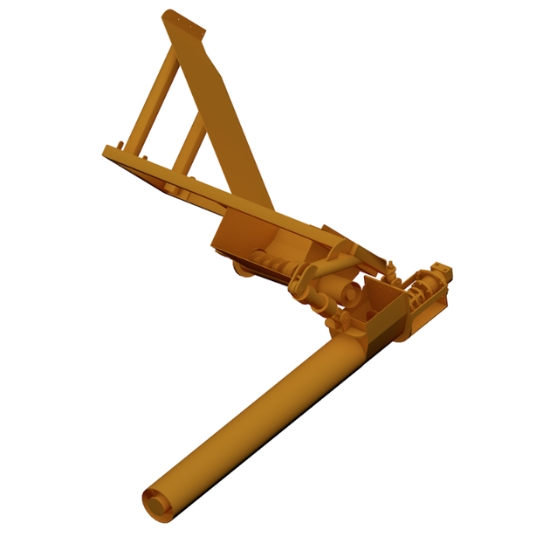
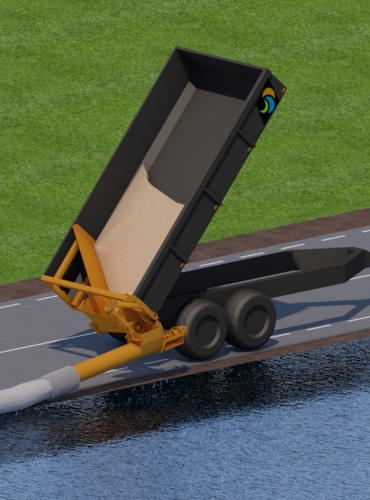
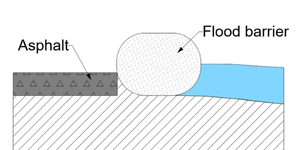
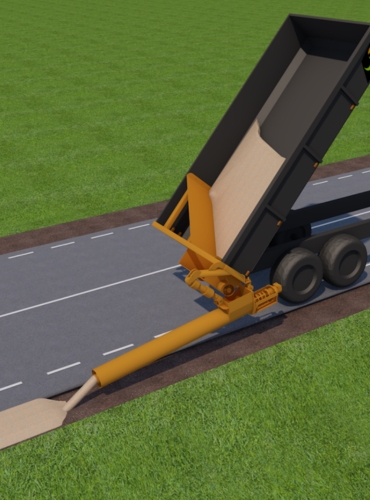
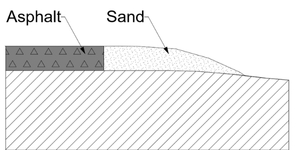
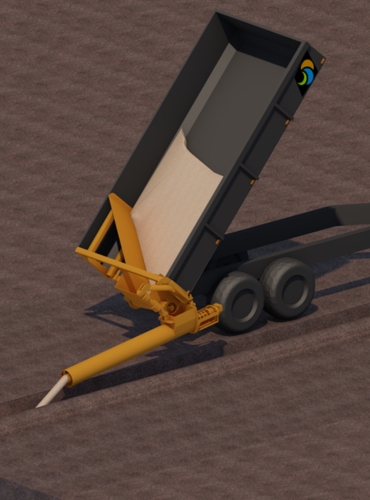
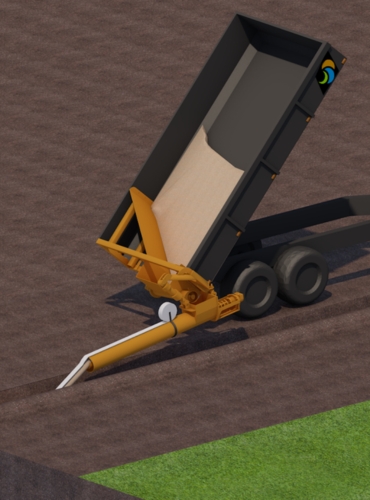
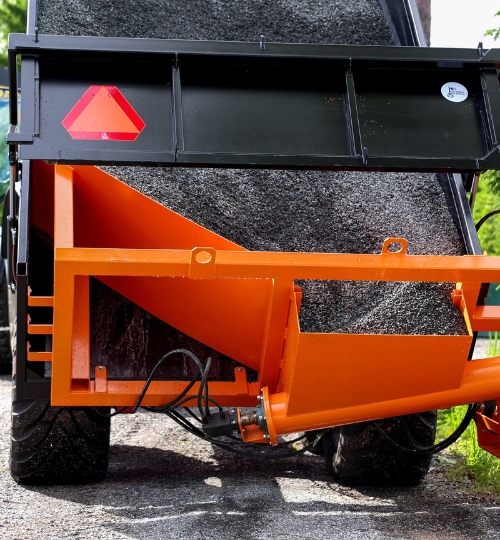
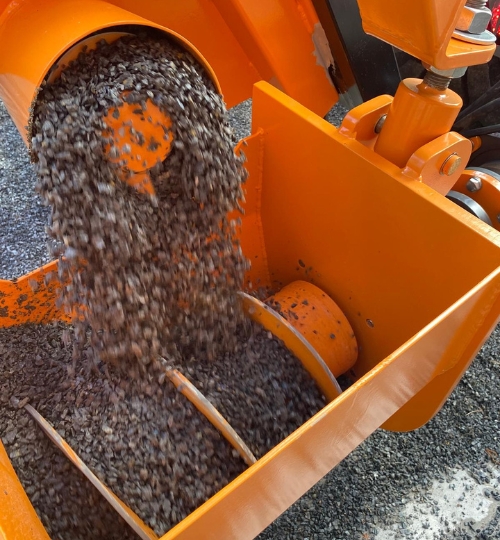
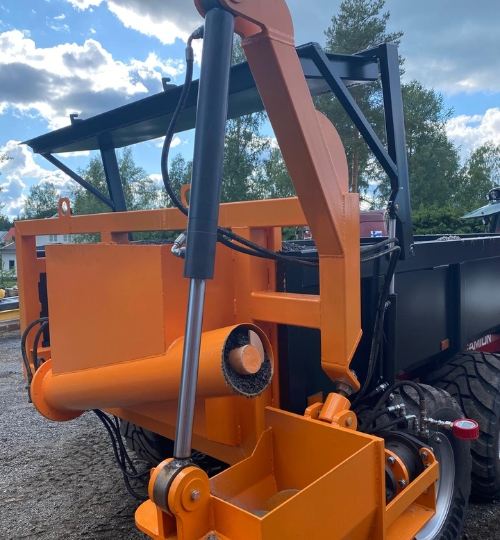
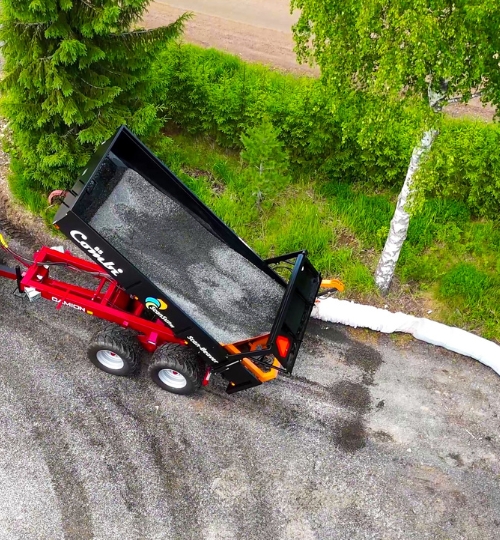
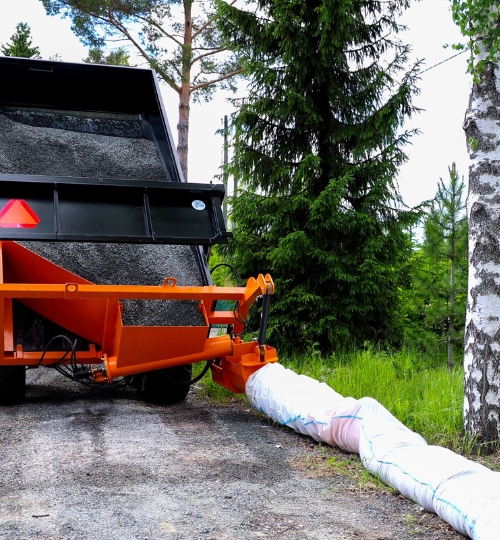
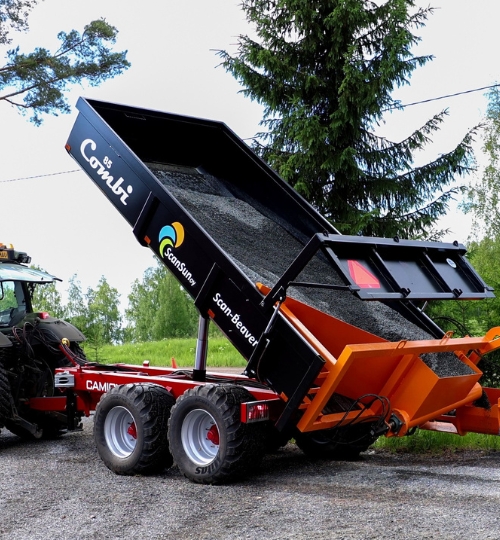
Scan-Beaver device with two screws, one moves the soil to the so-called main screw, from which the soil (sand) moves to the polypropylene fabric tube, both screws have their own hydraulic motor. This is how it is born.
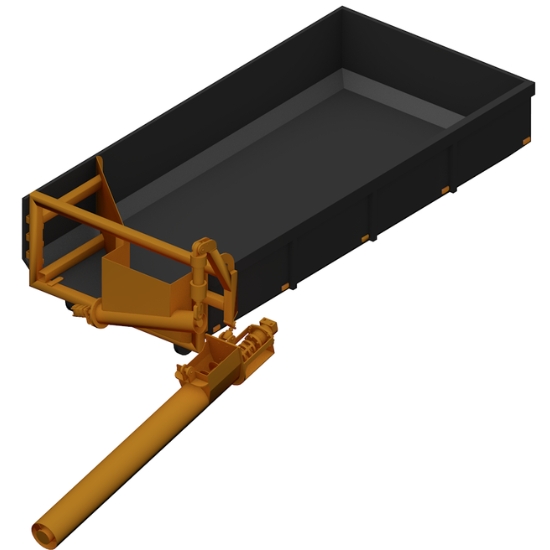
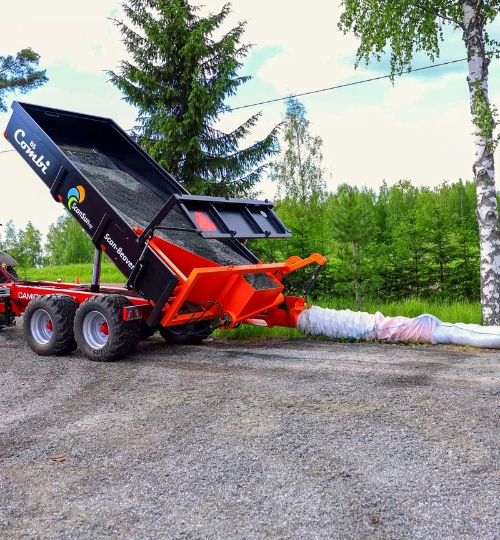
Scan-Beaver device attached to the platform. The device is easily removable, so the pallet can also be used for other purposes
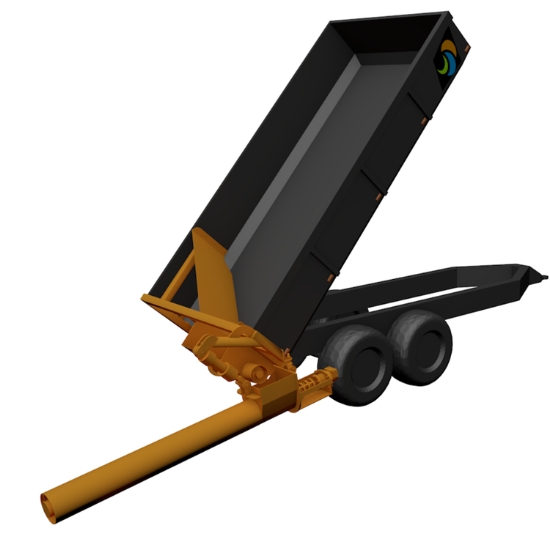
Scan-Beaver device in the tractor trailer, the device is easily removable, allowing the trailer to be also used for other purposes.
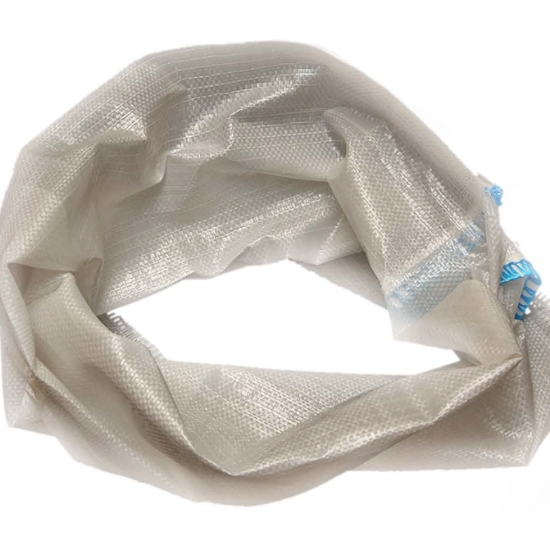
The „sock” is normally either a laminated or unlaminated polyprepylene fabric or jute-based fabric tube.
Scan-Beaver can be used for a variety of applications beyond flood control.
Barricade Installation
With the device it is possible to place multiple “socks” on the ground to create a stronger and higher barricade. Either adding two on top of each other or three in the shape of a pyramid.
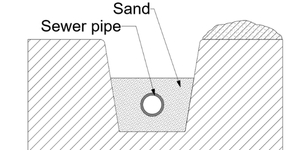
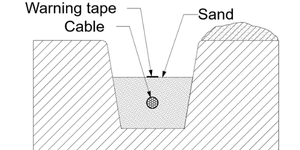
With the help of the device, the sand is brought into the trench, the cable is not damaged and at the same time the warning tape / attention tape can be installed.
With the help of the device, the sand is brought into the trench, the cable is not damaged and at the same time the warning tape / attention tape can be installed.